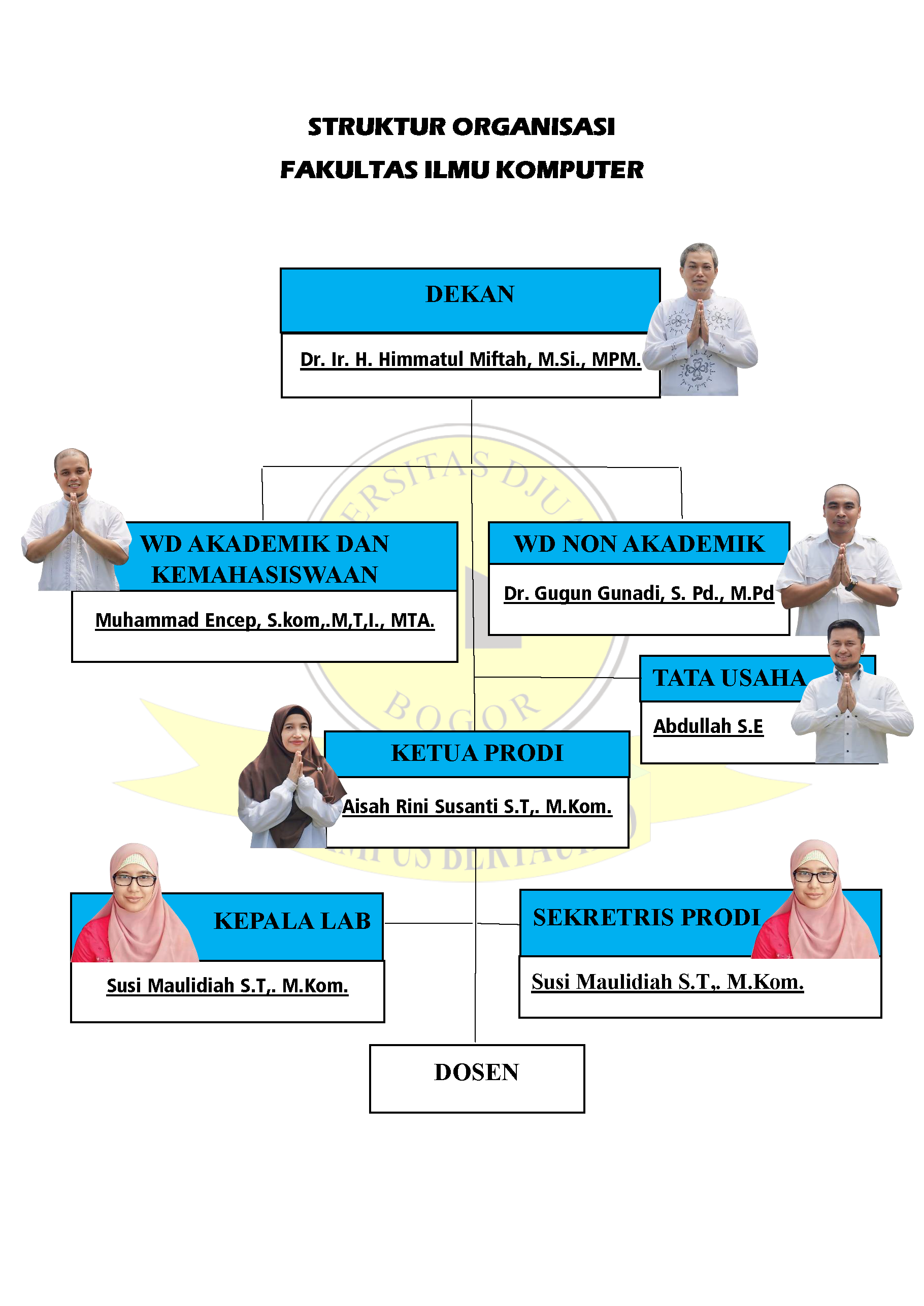
Faculty of Computer Science
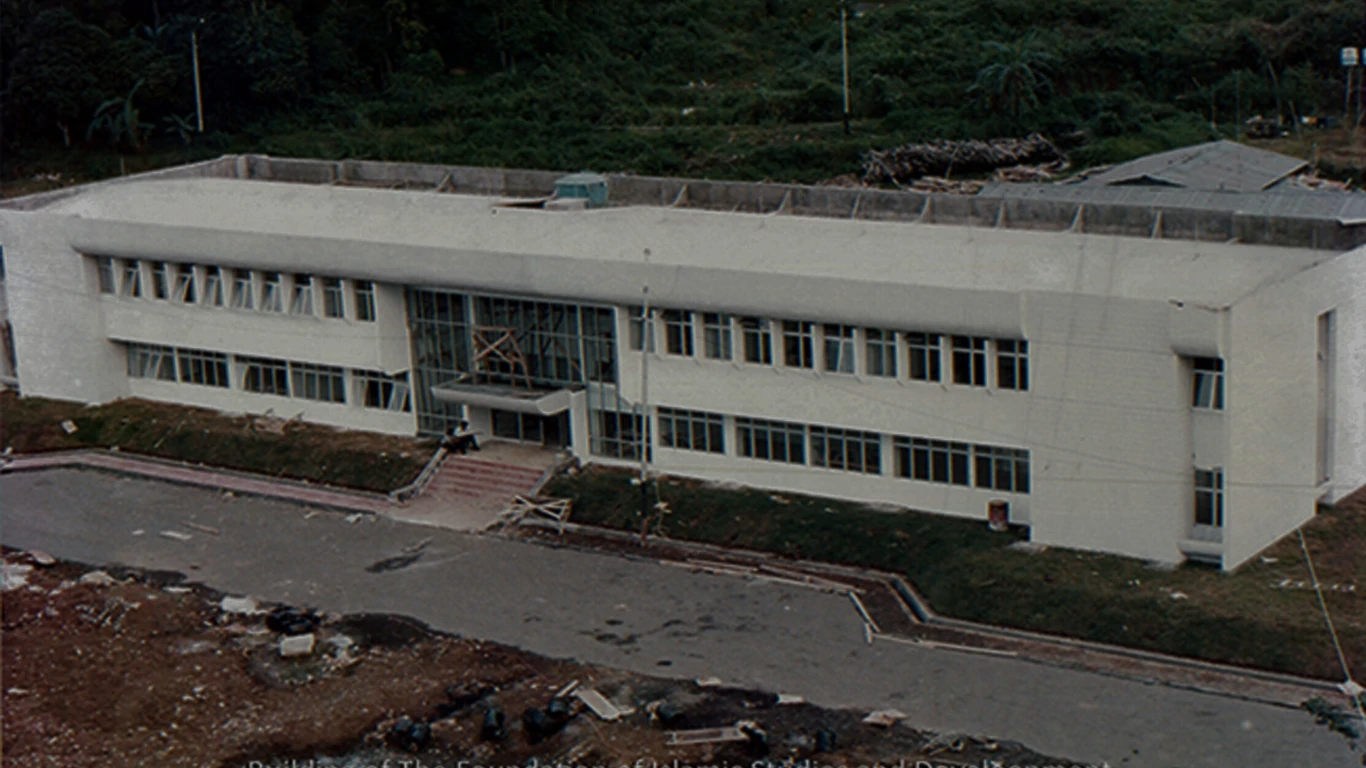
The Computer Science Study Program has its own history. Based on the Decree of the Ministry of Education, Culture, Research and Technology Number 9210/E1/ΤΡ.01.06/2021, the Djuanda University Computer Science Study Program was officially established on September 27, 2021. Initially, Computer Science Study Program was one of the study programs that were part of the Faculty of Engineering and Halal Food Science (FTIPH) referring to the decision letter from the management of the Amaliyah Indone- sia Islamic Development Study Center Foundation Number: 29/SK/YPSPIAI/XI/2021. After 1 year of establishment.
Computer Science Study Program officially moved to be part of the Faculty of Social, Political and Computer Sciences (FI- SIPKOM). After some time being part of Fisip- kom, after paying attention to the University High Council (MTU) meeting, a foundation decision was made Number 030 / SK-A1 / YPSPIAI / IX / 2023 dated September 1, 2023 regarding the Opening of the Faculty of Computer Science, Undergraduate Program (S1), Djuanda University, the Computer Science Study Program is under the Faculty of Computer Science (FILKOM) of Djuanda University. This transfer was carried out with the aim of strengthening and optimizing the development and implementation of education in the field of computer science.
The Computer Science study program in 2022 met the requirements for a GOOD Accreditation Rating based on BAN-PT decision letter No. 10485 / SK / BAN-PT / AB.P / XII / 2022. In the first year of education (2021/2022 Academic Year), the Computer Science Study Program had 14 students, in the second year (2022/2023 Academic Year) there was an increase in students of 414% with 58 people. The total number of Fisipkom students in the 2022/2023 academic year was 715 people, 72 of whom were Computer Science study program students and hopefully it will continue to grow in the following years, aamiin.
Becoming a Faculty of Excellence in the development of Computer Science and Technology to Educate the Life of the Nation that is Unified in Tauhid and International Standards.
Delivering advanced and high-quality higher education with international standards in the field of computer science and technology, capable of addressing the challenges of the digital era.
Conducting creative and innovative research in the field of computer science and technology that contributes significantly to the development of international-level science, business, and industry.
Carrying out community service through the application of appropriate and well-targeted computer science and technology to provide direct benefits to society.
Managing higher education in the field of computer science and technology with proper and good governance in accordance with applicable regulations.
Building a campus life integrated with the values of tauhid (monotheism).
Producing graduates in the field of computer science and technology who are equipped with the values of tauhid and capable of competing globally through advanced academic facilities with international standards.
Producing up-to-date research products in the field of computer science and technology aligned with the development of science, technology, arts, as well as halal and thayyib products that benefit society.
Producing community service programs with a solution-oriented approach that provide added value through the application of computer science and technology to improve societal welfare.
Improving the quality of higher education governance in the field of computer science and technology by upholding the principles of transparency, accountability, independence, justice, and participation, all integrated with the values of tauhid.
Building a tauhid-based culture in all academic and non-academic activities within the faculty community.
The realization of graduates with tauhid values in the field of computer science and technology who are able to compete at the global level.
The availability of advanced academic facilities to support the development of computer science and technology with international standards.
The achievement of publications, citations, intellectual property, artistic works, and halal and thayyib products in the field of computer science and technology that benefit society.
The development of international business and industry in the field of computer science and technology as alternative sources of faculty income that contribute to improving the community’s economy.
The enhancement of community service as a result of faculty research and creativity that offers solutions and added value based on computer science and technology.
The realization of professionalism among faculty members and educational staff that exceeds national standards.
The implementation of a quality assurance system that is transparent, accountable, independent, fair, and participative—rooted in tauhid—within the faculty.
The establishment of a tauhid-based academic atmosphere in every activity within the faculty environment.